INFORMATION on the XXVI International Scientific Conference on Isoprenoids (15-17 September 2026, Prague, Czech Republic)
A distinctive feature of the XXVI International Scientific Conference, held in Prague on 15-17 September 2026, was the celebration of the 60th anniversary of the Conference on Isoprenoids, which was first organized in 1966 on the initiative of the distinguished Czechoslovak and Polish chemists Professors Marian Kocór, František Šorm, and Vlastimil Herout. The history of the Conference on Isoprenoids is described in detail in the Almanac published to commemorate the anniversary (Prague, 2026, see https://www.ccsss.cz/index.php/ccsss/issue/view/57.
КThe conference was jointly organized by the Isoprenoid Society, the Czech Chemical Society, the University of Chemistry and Technology Prague, and the Czech Association of Scientific and Technical Societies. For the Isoprenoid Society, see https://isopsoc.org/.
The XXVI Conference on Isoprenoids featured 19 oral presentations and 29 poster presentations and brought together 90 participants from 19 countries. The presentations were substantive and addressed a range of current issues in the chemistry and pharmacology of natural isoprenoids, see https://www.ccsss.cz/index.php/ccsss/issue/view/57/105.
The presentations covered the following principal areas:
- Isolation of isoprenoids from natural sources and their synthesis;
- Biosynthesis and chemistry of isoprenoids;
- Bioactivity of isoprenoids;
- Methodology of isoprenoid research;
- Industrial and practical applications.
Houchao Xu of the Max Planck Institute for Chemical Ecology (Jena, Germany) delivered a lecture in memory of Professor Kenji Mori entitled “Biosynthesis of Cardenolides in Chrysolina Beetles.” Jeroen S. Dickschat of the Kekulé Institute of Organic Chemistry and Biochemistry, University of Bonn (Bonn, Germany), delivered a Chemistry Europe lecture entitled “New Insights into Non-Canonical Terpene Biosynthesis.” Giovanni Appendino of the University of Piemonte Orientale (Novara, Italy) gave a special lecture entitled “František Šorm: Scientist, Politician, Titan of Natural Product Chemistry”.
 |
 |
 |
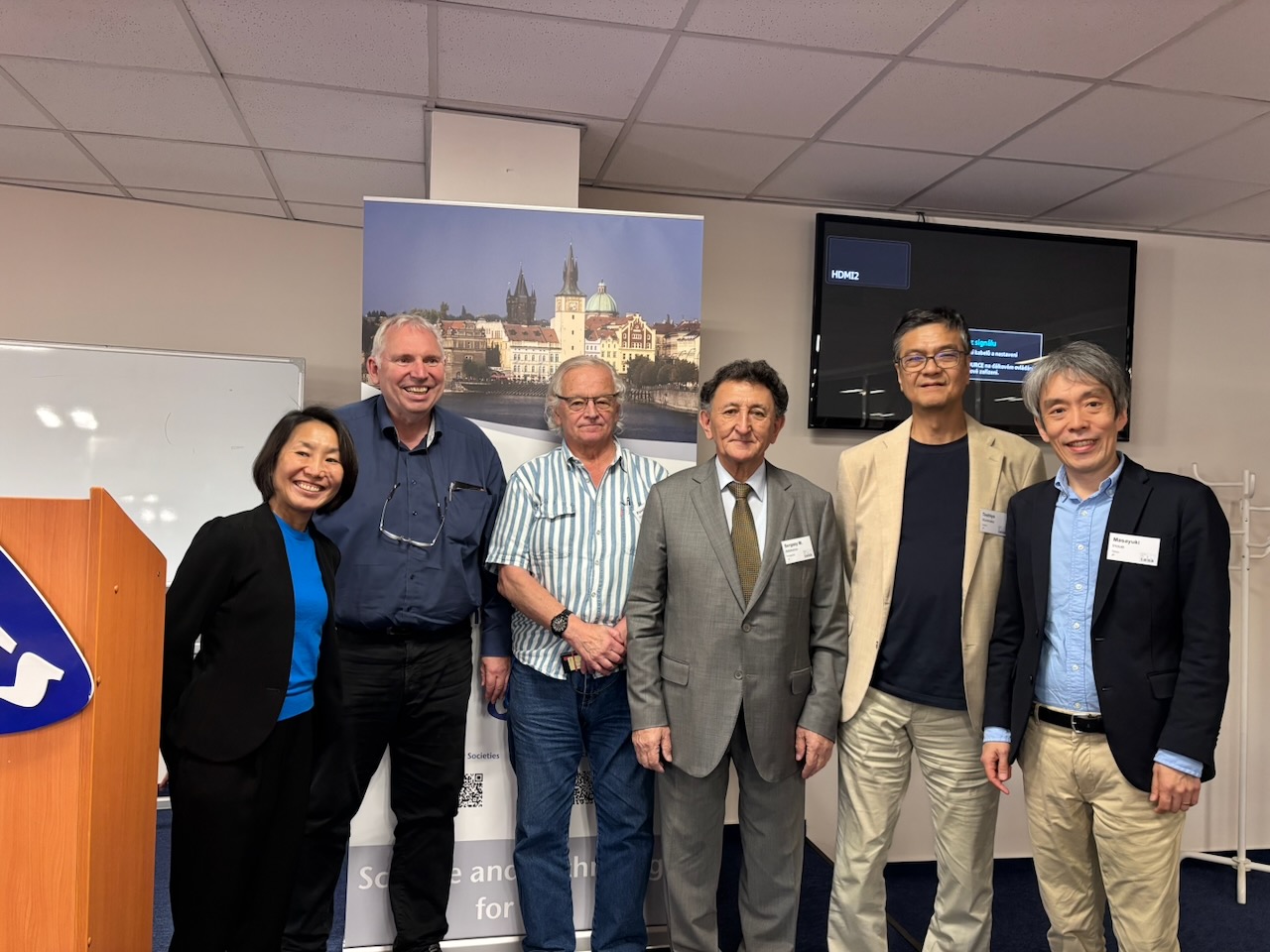
The plenary lectures were delivered by Masayuki Inoue, The University of Tokyo (Tokyo, Japan) - “Total Synthesis of Highly Oxygenated Natural Products”; De-An Guo, Shanghai Institute of Materia Medica, Chinese Academy of Sciences (Shanghai, China) - “Key Isoprenoids in Traditional Chinese Medicines and Their Applications”; and Martin Kotora, Charles University (Prague, Czech Republic) - “Synthesis of Compounds with an Estrone Skeleton”.
 |
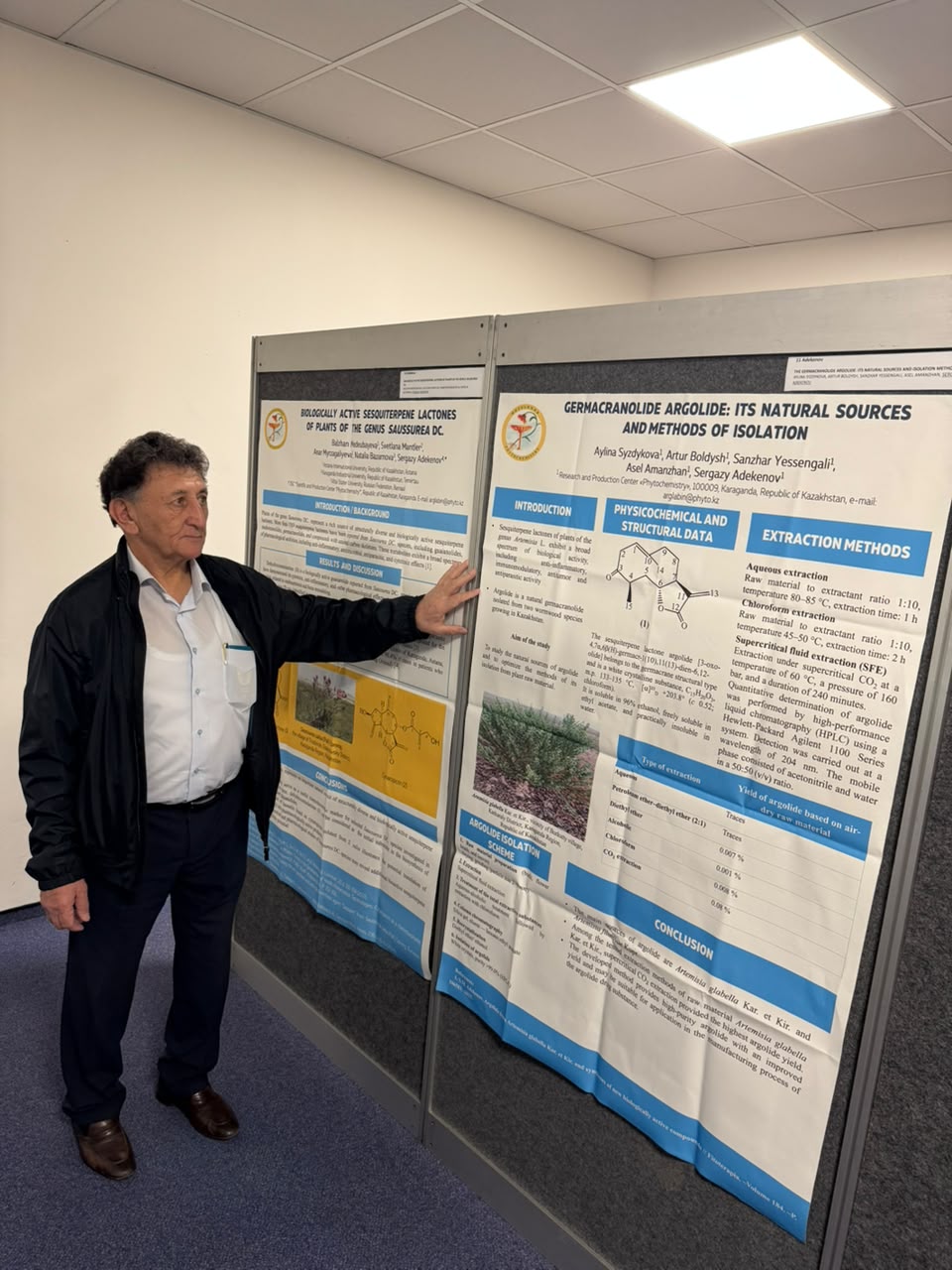 |
The keynote lectures were delivered by Jean-Michel Brunel, Aix-Marseille University, INSERM, SSA, MCT (Marseille, France) - “Squalamine and Aminosterol Derivatives: New Promising Highly Active Antimicrobial Agents”; Toshiya Muranaka, Osaka University (Osaka, Japan) - “From Understanding to Engineering Plant Isoprenoid Metabolism: Two Decades of Glycyrrhizin Research and Future Perspectives”; Daofeng Chen, Fudan University (Shanghai, China) - “Anticomplementary Traditional Chinese Medicines for the Treatment of Pulmonary Infections”; Sergazy Adekenov, Scientific and Production Center “Phytochemistry” (Karaganda, Republic of Kazakhstan) - “Sesquiterpene γ-Lactones Containing an Oxirane Ring: Promising Sources of Drug Candidates”; Kaori Sakurai, The University of Tokyo (Tokyo, Japan) - “A Chemical-Probe-Based Approach to Elucidating the Mechanism of the Anticancer Activity of the Steroidal Saponin OSW-1”; Ludger A. Wessjohann, Leibniz Institute (Halle, Germany) - “Advanced Isoprenoid Discovery and Elucidation of Their Functions and Mechanisms of Action Using Chemoinformatics and Machine-Learning/Artificial-Intelligence (ML/AI) Tools”; Zsolt Szakonyi, University of Szeged (Szeged, Hungary) - “Steviol and Gibberellic Acid (GA3): Versatile Diterpenes for the Synthesis of Biologically Active Potential Therapeutics”; Eva Kudová, Institute of Organic Chemistry and Biochemistry (Prague, Czech Republic) - “Tide Quencher 1-Containing Steroid Probes Enable Real-Time Mapping of Novel Non-Canonical Cholesterol-Binding Sites on the M1 Muscarinic Receptor”; and Shingo Nagano, Tottori University (Tottori, Japan) - “Crystal Structures of CYP85A3, a Cytochrome P450 Completing Brassinosteroid Biosynthesis via Baeyer-Villiger Oxidation”.
 |
 |
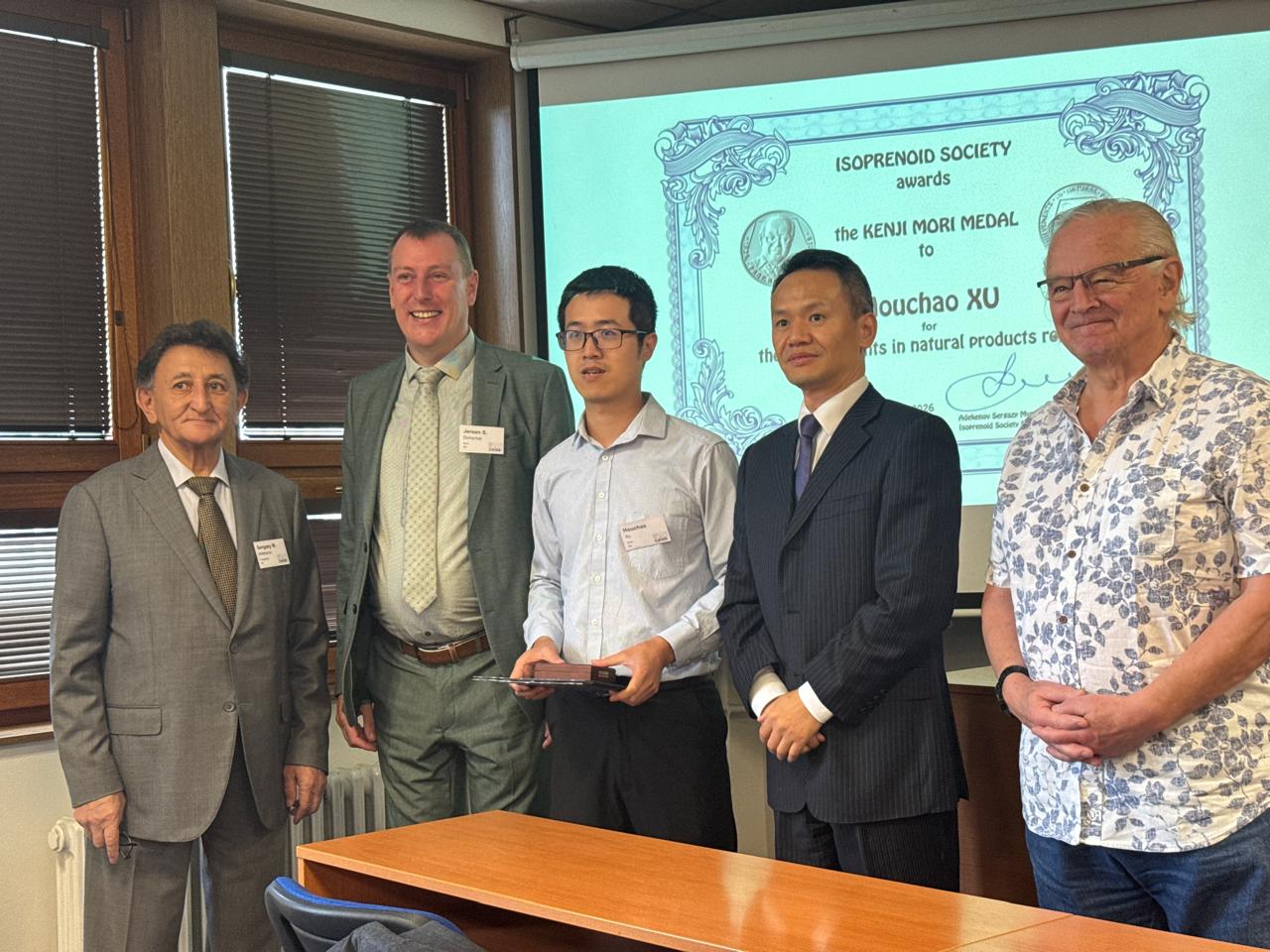
A number of scientists received awards during the conference. The 2026 Professor Kenji Mori Award was presented to Houchao Xu of the Max Planck Institute for Chemical Ecology (Jena, Germany). The Olchemim Award was presented to Ludger A. Wessjohann of the Leibniz Institute of Plant Biochemistry (IPB) (Halle (Saale), Germany). The Professor Felice Senatore Award for a presentation in the field of phytochemistry was presented to Daniel Załuski of Nicolaus Copernicus University (Toruń, Poland). Chemistry Europe Awards were presented to Jean-Michel Brunel, Aix-Marseille University, INSERM, SSA, MCT (Marseille, France); Ivana Kuzminac, University of Novi Sad (Novi Sad, Serbia); and Kaori Sakurai of The University of Tokyo (Tokyo, Japan). The awards and certificates were presented to the laureates by Professor Sergazy Adekenov (Republic of Kazakhstan), President of the Isoprenoid Society.
 |
 |
 |
 |
An analysis of the presentations delivered at the conference indicates a substantial increase in the proportion of studies employing genetic, genomic, and molecular-biological approaches. At the same time, the number of “classical” phytochemical studies focused on the isolation of compounds from natural sources and structural elucidation has declined, as has the number of studies devoted to the synthesis of natural products. Research on steroids and marine organisms was also less prominent. Overall, these changes reflect a broader shift in isoprenoid research from traditional phytochemical approaches toward studies of biosynthetic processes at the molecular and genomic levels, a trend that is also evident in other areas of contemporary science.
A particularly notable trend was the growing interest in compounds with anticancer activity, which constituted the largest proportion of studies addressing biological activity. Interest in antibacterial activity is also increasing. These trends are consistent with the continuing importance of anticancer and antimicrobial drug discovery and indicate that these areas remain among the principal directions for the investigation and potential application of isoprenoids. The expanding use of biotechnological approaches was also clearly evident.
Most of the biological-activity studies presented at the conference remained at the preclinical stage, and only a limited number included in vivo experiments or had progressed to more advanced stages of development. Consequently, it is difficult to predict which of the reported findings will ultimately advance toward practical therapeutic application. Future conferences could benefit from greater participation by scientists from spin-off and biotechnology companies with direct experience in the preclinical and clinical development of novel drug candidates. Their involvement would provide academic researchers with valuable practical perspectives on the translation of promising scientific findings into drug-development programmes.